Showing posts with label DOG OWNERSHIP 'N RESPONSIBILITIES. Show all posts

Saturday, August 13, 2016

Why is Dog Ownership Important After Retirement?

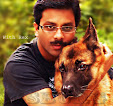
Karl Heyne and Heynfeld Varrgo (CL I ‘A’ ‘Z’ H-neg) (better known as Arko)

Post retirement dog ownership is something that can be considered as a kind of health advice – both physical and psychological health. Apart from some of the common facts that a well-bred dog can keep you active, and helps you fight loneliness after your retirement, a dog brings in a healthy structure and routine to your daily life and improves your quality of life.

Very recently the American Heart Association reviewed studies exploring the correlation between health and dog ownership. The findings concluded that owning a companion dog helps having a controlled blood pressure and healthy cholesterol level. Chances of obesity and developing arthritis decrease due to the need for regular walk.

Dog Ownership and Stress Management 

Studies have shown that healthy interactions with therapy dogs effectively mitigate stress in dog owners. As effect of such interactions with companion dogs the humans tend to generate stress-bursting hormone oxytocin and controls the production of cortisol, the stress hormone. This hormonal change helps a stressed out, retired person feel relaxed. Interact with the dogs through physical contacts like hugging and petting them produced better results.

A team of Italian researchers, noticed that introduction of a dog to Alzheimer’s patients showed gradual improvement in the patients' condition.

Live a Purposeful Life After Retirement

As already mentioned above, owning a dog brings in a healthy structure and routine to your daily life.Your dog lives on a natural structure in her everyday life, which is bound to bring in a structured discipline into your life too.Your pet’s dependence on you for everything – starting from the play and walk to food reveals immense opportunity for you to establish a consistent routine as a responsible pet owner in your daily walks of life.Your dog will lick you awake to go for a morning walk, followed up a free play session, and then asking for her meal. This keeps you active throughout the day and helps you feel engaged, responsible and productive after you retire from your working world.
How better can you kick start your day than by waking up with licks and hugs? Retirement should help you find a new way to wake up from your bed each morning. It is very pleasant way to start the day when some million dollar licks awake you up and you like to hug your dog, and find an immediate purpose to get out of bed.

Post Retirement Fitness 

A majority of responsible dog owners are dog walkers, who get at least 30 minutes of exercise on an average each morning and evening. Regular walks in the morning and evening are great ways to stay healthy – both physically and mentally. Regular walks will ward off possible health issues like obesity, diabetes type II, hypertension, arthritis and loss of volume and strength of skeletal muscle mass (sarcopenia).

Post Retirement - Mental Fitness and Social Life 

Depression is quite common when you are retired from your working life. It pulls you back from meeting friends and going out with acquaintances. Benefits of dog ownership treads its way here. Psychologists say owning a pet – especially during your retired life adds a little more responsibility which, in turn, can introduce a positive note to your life. Sense of responsibilities towards a pet that entirely banks upon you helps you feel your worth and significance. Moreover, he/she will like to develop new contacts and meet other dog owners in the locality. This means he/she becomes more and more social.

All these tend to keep the person in proper shape mentally. This is how dog ownership, in the retired life, is often implicated in relieving symptoms of depression– especially among elderly people after their retirement from working life.

 Karl Heyne and Heynfeld Varrgo (CL I ‘A’ ‘Z’ H-neg) (better known as Arko)

Direct Health Benefit

Research in the 1980s popularized the view owing a companion dog could have great health benefits in humans... including benefits ranging from lower mortality rates from heart attacks to lowering risks of asthma (in children) and reducing chances of developing cardiovascular conditions.
However, modern researchers have found no direct link between owning a pet and health benefits. Therefore, previous conclusions could not be scientifically supported by modern studies.

BUT

There’s still another proposal placed by modern researchers. According to them, pets help to enhance social interactions with more pet owners, thus have indirect effect on well-being. “Being Social” and “interaction with like-minded people” has long been recognized to have a tremendous beneficial effect on health by the way of alleviating symptoms of depression by reducing loneliness and social isolation.

Pets – especially dogs therefore act as a catalyst for social interactions, leading to developing broader social sphere, thus contributing to better physical and psychological well-being in older people and those who have just retired from their works.

Photos courtesy Noreen Symes
 

Read more...

Buzz this

Thursday, May 30, 2013

More Than One German Shepherds? Pack Management Rules

Do you have more than one German Shepherds? Great, if you have! And I hope you know all rules of keeping multiple dogs - especially large breeds GSD, Rotties, Danes and Dobs. If you already know and if you are an experienced dog owner having several dogs, I am sure you will still like to read this post. This post is going to talk about something that probably many of the professional trainers and canine behaviorists do not tell you while giving you advices. Here is why you should NOT kennel all you dogs together even though they are highly obedience trained.

Yes... it is suggested not keeping all your dogs (irrespective of breeds, types, groups and size) together as a group in a single unit. Once your German Shepherd puppies reach an age of approximately 70 days you should consider kenneling them in separate suites. As several German Shepherd puppies grow together under one roof they will eventually develop a very strong pack. Since pack instinct is already genetically ingrained in dogs the instincts gets strengthened as they live and grow together in a single suite. Once your group of shepherds starts developing the pack they will also have a pack leader - the "Alfa Member" of the pack, who is usually the dominating specimen of the group. Eventually he/she (pack leader) will develop dominance problem.

Moreover the pack, as a whole, will gradually turn out to be more and more territorial. The entire pack will consider the whole area where all of them together or any member of the pack roam about as their territory. This means their territory widens up. Not only this, the pack's prey instinct will also be strengthened, which in turn stimulate the whole pack to exhibit attacking tendencies within their territory that is already wide.
Pack problems, at times, turns a simple undesirable behavior to a serious intra-pack aggression which can end up with an irreparable loss. Most types of group bad manners is often a start to aggression, which cannot be handled easily - especially when its a pack of large breed dogs German Shepherd, rottweilers, Dobermans etc.

Exception: There is obviously ONE exception to this norm. Opposite genders can be kept together in a single suite. And this is the only one single exception! Particularly for Bullmastiffs two males or two females should NEVER be left together unsupervised.


Pack Management 

Kenneling: Kennel you dogs separately in different units. Keeping them separately will not allow them to develop a pack. This means your dogs will have little chance to develop pack bad manners.

Feeding: Feed the German Shepherds separately - preferably in different rooms each closed. NEVER let your dogs eat from a single bowl at the same time.

Playing: Walking them together, if they are obedience trained, is good; but it's a bad idea to put them into competitive play like letting them all fetch a ball or a Frisbee at the same time.

Wait Exercise: The wait exercise is a good practice - especially when you have taken all your dogs to play freely. It is, however, essentially necessary that the pack should learn to wait until they are asked to go do something. This will keep them from getting into any competition during the play.

Share: Make sure that each member of the pack gets their fair share of attention, love, enjoyment, play and food. The chance of fight for these things will be mitigated.

Treating all dogs equally in front of each of them: It is important to support the dominant one when all other pack members are together. However, it is also important to treat all of them equally but love them with equal weight in their separate room. After all each of them deserves equal love and care.

Read out 10 Rules of Pack Management

Read more...

Buzz this

Saturday, November 10, 2012

Features of a Good Dog Training Collar

Dog training collars have created a good buzz across the canine community. Many pet product manufacturers are making good business by selling electronic dog training collars. It is however important for the owners to know the features of a good dog training collars, so they can buy the right thing for their dogs.

Training your dog by using a electronic dog collar is completely a humane process and doesn't create any kind of discomfort to your dog. The low static stimulation that a remote training collar gives to a dog helps him/her to concentrate on the verbal commands that the trainer delivers. Doubtlessly the stimulation training system is million times more safe and humane and more effective than the traditional choke collar and prong collar training process. With a remote control electronic dog training process discards the need for the choke chain or prong collar.

Area of the field of operation (distance between the transmitter and the dog wearing the collar) is another thing. A good device features an effectiveness from a distance up to 500 feet and the trainers gets good control and the dog soon identifies the commands. However, there are better devices that covers even up to 800 meters. The contemporary hi-tech devices works on remotes with transceiver technology and has gained a great popularity among dog lovers. The LCD screen is an added advantage in the better ones and it helps you by clearly displaying your dog's activities.

Get more information at http://dogtrainingcollars.com

Read more...
Buzz this

Saturday, October 20, 2012

Containment System: Dog Fence

Protecting your dog is one of the most important things that should be kept in the forefront of your mind - especially if your dog is aggressive, not properly socialized and pregnant. It is important to fence your dog's yard. A physical fence is highly preferred over the electronic ones if your dog is not well trained. If you are planning to install an electronic or electric dog fence consider training your dog perfectly. All you need is to invest some time in training your dog to use the fence.

The basic principle of a dog fence training is to teach your dog to retreat back as soon as the hear the beep sound. However effective it is, no containment system will work for you if you cannot train your dog to identify the sound to hold back. The training is easy, and easier if you can hire a professional dog trainer for a few weeks. All you need to do is to introduce your dogs to the containment system and teach them what exactly you want them to do (hold back - not moving ahead) when the hear the alert beep.

Find out more information about http://www.dogfencediy.com

Read more...

Buzz this

Saturday, April 25, 2009

How to Establish Your Alpha Position in The Pack


Hey... here's something that every German Shepherd dog owner should know. I call these the rule of thumb that you should follow to ensure that your dog know his position in the family - the human pack. If your GSD gets aggressive when you touch his food or growls at anyone in the family, these rules should be followed strictly. Remember, our dogs are the most lovable member of the family, but they should have a clear rank in the pack and they should know that perfectly. Dogs - especially the dogs like German Shepherds, Rottweillers, Dobermann Pinschers etc. that lack in this clear order are the most unhappy member of the pack and might even become nightmare for you. You need to understand your German Shepherd Dogs and it can be done by seeing the way way he carries himself!

Sometimes, your German Shepherd Dog might not be showing signs of aggression, however the dog might suddenly start showing signs of separation anxiety, such as destructive behaviors when you get out of your house. If your German Shepherd Dog steals food from your hand or from your friend's, this gives an indication that your dog has no respect for the human, and doesn't see them as the leader of the pack. Unquestionably, your GSD shouldn't be the alpha member of the household pack. Such dogs (irrespective of breeds), who questions his place in the household pack are sure to become destructive, because he is confused and tend to take his anxiety out on you or whoever comes in his way. Just on the contrary, if your GSD knows his place in the household pack is a happy companion and would never exhibit undesirable behavior.

If you are a responsible GSD owner you should follow the rules mentioned below to ensure that your German Shepherd Dog knows his place in your human pack.
  • Teach your GSD to Heel: One most effective way to make him understand that you are the Alpha member of your pack is to take him for a walk... not the type of walk that you mostly come across. Make him heel not to lead you, but to be led! Don't allow him to pull you and to sniff or eliminate where ever he wants, but where you allow. Sometimes trainers will prefer your dog to pull hard. Don't allow this until he is for show.
  • Feeding: Eat before feeding your dogs. If you have to feed your Shepherd before you, you can do so, but do not forget to keep him away from you when you eat. Do not allow any member of your family to feed your dog any table scraps during your meal time. Feedings must be at a scheduled time.
  • Rushing through doorways: Do not let your GSD go through any doorways first. Or up or down the stairs first. Your Shepherd must always go through the doorways or up and down the stairs following you or other human member of your pack.
  • Act of Ignorance: If you were away for a long span of time your dog will be anxious to see you back. This is the power of love. But still when come back in the room, ignore your beloved boy for a minute or two.
  • Obedience Command: Simple obedience commands such as “Sit” and "Stay" must be taught well. Commands should be given to obey before any pleasurable interaction with your German Shepherd Dog. Before all play sessions, feeding, walking, petting your German Shepherd Dog should be know to be quite. Your dog should take the treat from your hands gently.
  • Higher Pack Position: During the time you are establishing your higher pack position (Alpha Membership), don't hug your dog, nor pat your dog.
  • Eye Contact: Make sure your dog should avert his gaze first when you establish an eye-to-eye contact with him. If you avert your eye contact first this reinforces the dogs higher power position. Do not allow your kids to participate in the staring contest with your dog. If your children avert or blink first, it will make your dog think "He" is the Boss.
  • Fetching Games: Games of fetch, pull or play with toys should be started anf ended by you and not your dog.
  • No tug-of-war: Tug of war is the game of power. In case you lose the war, it may reinforce your German Shepherd to come to the conclusion that he is more powerful than you and if this happens consistently, your dog may develop a dominating tendency.
  • Teach him "Release Command": It is mandatory to teach your German Shephersd Dog to release things. Just teach him the one word command - "DROP" to release things. Any objects your dog has in his possession should be able to be taken away safely by you and othet members of your family.
  • Don't Leave Your Kid and Dog Unsupervised: Kids should never be left unsupervised with dogs. This doesn't hold good only for your children but for anyone who cannot maintain leadership over your dog, especially if he is a dominating dog.
  • Don't be scares and Avoid anxiety: There's actually no reason to fear your dog, but fear sometimes come if your dog has a highly dominating nature. When you are around your dominating dog avoid emotions like fear and anxiety... also do not be harsh and rude to him. German Shepherds Dogs are highly sensitive and can sense these emotions more effectively than many other dog breeds. If he senses these emotions he might consider you as a weaker member of the pack, which will escalate your problem.
  • Physical and Mental Exercise: Most of the people tend to confuse happiness with excitement in your German Shepherd Dog. The most successful way to maintain your Alpha position in the pack is to humanize your dog's behavior, although it's not everyone's cup of tea. Putting him to training session is essentially important! If your German Shepherd Dog runs around insanely excited, then he is lacking in physical and mental exercise. Take him to regular exercise - play session. But make sure you should make him practice the "Sit" and "Stay" activities in the middle of the play. This way you can ascertain your leadership by giving him "Sit" and "Stay" command.
These are the rules that are not confined with German Shepherd Dog breed, but most of the other powerful, stubborn and intelligent breeds of dogs. By incorporating behaviors your dog will consider you to be the leader of the pack - Alpha over him! Obedience exercises simply works like magic while maintaining your Alpha position. Click here to know how to deal with difficult dogs and also find some Frequently Asked Questions about German Shepherd Dogs!

Read more...

Buzz this

Tuesday, September 4, 2007

Responsibilities Of A Dog Owner

The responsibility of an owner or in the other way round, responsible ownership starts before purchasing a dog and never after bringing the dog home. After bringing the dog the responsibility only magnifies. The sense of responsibility starts with at least a short term study about the dogs to know the pros and cons of the story.

Ask certain questions to yourself before you bring the little pooch to your home.
1. Is the breed I am looking for really suites me?
2. Is the home I live in apt for a dog?
3. Do all the members of my family love dogs?
4. Dogs cant be left alone for a long span of time. Am I okay with this?
5. Money you may have. But the other two essential things that is really needed to upkeep a dog, are Time and Energy. Can I afford these for my dog?
6. In the knowledge that, having a pet means having my own child, which is an aspect with high degree of responsibility and demands a lot of sacrifice, can I still afford to keep a dog?
Well, YOUR LITTLE CUTE PUPPY HAS SOMETHING TO SAY :

1. PLEASE ALLOW ME TIME TO UNDERSTAND YOUR BEHAVIOUR, YOUR FAMILY AND THE PLACE.
2. YOU CAN HAVE EVERYTHING -- YOUR OFFICE, YOUR COLLEAGUES, YOUR CHESSBOARD, YOUR SWIMMING POOL --- BUT I HAVE GOT NONE BUT YOU. PLEASE LOVE ME .... IT'S ENOUGH.
4. I NEED ONLY THREE THINGS TO THRIVE WELL -- PURE LOVE, GOOD FOOD AND FRESH WATER.
3. MY LIFE SPAN IS ONLY 9 TO 12 YEARS. ANY SEPARATION FROM YOURSELF DURING MY OLDER DAYS SHALL BE DESPERATELY PAINFUL FOR ME.

Read more...

Buzz this

Last Year's Most Read Out Posts

Advertise with us

About This Blog

All you need to know about German Shepherd Dogs. Read out what I have to share with you regarding the amazing German Shepherd Dog breed. Are Alsatian dogs and German Shepherd Dogs same? Who was Max Von Stephanitz and What is SV? Also learn a bit more in depth on German Shepherd Dog training tips, German Shepherd puppy care tips, German Shepherd Dog behavior, German Shepherd instinct, German Shepherd Dog standard and history of German Shepherds.

  © Our Blogger Template for Aringsburg's German Shepherd Dogs

Back to TOP