Showing posts with label German Shepherd Dog Standard. Show all posts

Monday, January 20, 2020

Federation Cynologique Internationale (FCI) Standard for German Shepherd Dog
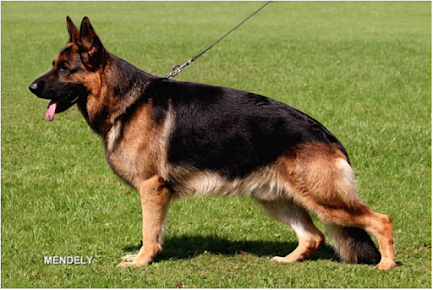

Perfect German Shepherd Dog as per FCI Standard

WUSV German Shepherd Dog standard

The Fédération Cynologique Internationale (FCI) is an international federation of kennel clubs. The organization has its root in Thuin, Belgium. The English language translation of ”Fédération Cynologique Internationale", is "World Canine Organisation", though it has not been in use much. The major goals of FCI have been described in Article 2 of their regulations.

They have always aimed at encouraging and promoting breeding and use of purebred dogs whose functional health and physical features meet the standard formulated for every single canine breed so that each breed should be effortlessly capable of doing what they have been bred for. The sole emphasize is laid down on maintaing the physical and metal configuration as well as their characteristics, colors, expressions and every other detail related to the respective canine breed. Here is what FCI - Fédération Cynologique Internationale has to say about the German Shepherd Dog Standard. For any German Shepherd Dog breeder or owner or trainer etc. it is of utmost necessity to keep the FCI GSD standard in mind. Development of the breed is our responsibility!

1) General Appearance

The German Shepherd Dog is medium sized. With the hair pressed down, the height at the withers is measured by stick along the vertical as it follows the line of the elbow from the withers to the ground. The ideal height at the withers is 62.5 cm for males and 57.5 for females. An allowance of 2.5 cm over or under is permissible. Exceeding the maximum as well as not meeting the minimum diminishes the working and breeding value of the dog.

The German Shepherd is slightly long, strong and well-muscled. The bones are dry and the structure firm. The ratio of height to length and the placement and structure of the limbs (angulation) are so balanced that a far-reaching, effortless trot is guaranteed. He has a weather proof coat.

A pleasing appearance is desired as long as the working ability of the dog is not called into question.

Sex characteristics must be pronounced, e.g., the masculinity of the males and the femininity of the females must be unmistakable.

The German Shepherd that corresponds to the Standard offers the observer a picture of rugged strength, intelligence and agility, whose overall proportions are neither in excess or deficient in any way. The way he moves and behaves leaves no doubt that he is sound in mind and body and so possesses physical and mental traits that render possible an every-ready working dog with great stamina.

It is only possible for a practiced expert to ascertain the presence of requisite working dog traits in the German Shepherd. Therefore, only special judges should be called upon, as it is incumbent on them to judge the character of the dogs brought before them. This should include a test for gun soundness, as only German Shepherd Dogs that have achieved recognized working dog titles may receive the breed rating excellent.

With an effervescent temperament, the dog must also be cooperative, adapting to every situation, and take to work willingly and joyfully. He must show courage and hardness as the situation requires to defend his handler and his property. He must readily attack on his owner's command but otherwise be a fully attentive, obedient and pleasant household companion. He should be devoted to his familiar surroundings, above all to other animals and children, and composed in his contact with people. All in all, he gives a harmonious picture of natural nobility and self-confidence.

2) Angulation and Movement

The German Shepherd Dog is a trotter. His gait exhibits diagonal movement, i.e., the hind foot and the forefoot on opposite sides move simultaneously. The limbs, therefore, must be so similarly proportioned to one another, i.e. angulated, that the action of the rear as it carries through to the middle of the body and is matched by an equally far-reaching forehand causes no essential change in the topline. Every tendency toward over-angulation of the rear quarters diminishes soundness and endurance. The correct proportions of height to length and corresponding length of the leg bones results in a ground-eating gait that is low to the ground and imparts an impression of effortless progression. With his head thrust forward and a slightly raised tail, a balanced and even trotter will have a topline that falls in moderate curves from the tip of the ears over the neck and level back through the tip of the tail.

3) Temperament, Character and Abilities

Sound nerves, alertness, self-confidence, trainability, watchfulness, loyalty and incorruptibility, as well as courage, fighting drive and hardness, are the outstanding characteristics of a purebred German Shepherd Dog. They make him suitable to be a superior working dog in general, and in particular to be a guard, companion, protection and herding dog.

His ample scenting abilities, added to his conformation as a trotter, make it possible for him to quietly and surely work out a track without bodily strain and with his nose close to the ground. This makes him highly useful as a multi-purpose track and search dog.

4) Head

The head should be in proportion to the body size (in length approximately 40% of the height at the withers) and not coarse, over refined or overstretched (snipey). In general appearance, it should be dry with moderate breadth between the ears.

The forehead when viewed from the front or side is only slightly arched. It should be without a centre furrow or with only a slightly defined furrow.

The cheeks form a gentle curve laterally without protrusion toward the front. When viewed from above, the skull (approximately 50% of the entire head length) tapers gradually and evenly from the ears to the tip of the nose, with a sloping rather than a sharply defined stop and into a long, dry wedge-shaped muzzle (the upper and lower jaws must be strongly developed.)

The width of the skull should correspond approximately to the length of the skull. Also, a slight oversize in the case of males or undersize in the case of females is not objectionable.

The muzzle is strong; the lips are firm and dry and close tightly.

The bridge of the nose is straight and runs nearly parallel with the plane of the forehead.

5) Dentition

Dentition must be healthy, strong and complete (42 teeth, 20 in the upper jaw and 22 in the lower jaw). The German Shepherd Dog has a scissors bite, e.g. the incisors must meet each other in a scissors like fashion, with the outer surface of the incisors of the lower jaw sliding next to the inner surface of the incisors of the upper jaw.

An undershot or overshot bite if faulty, as are large gaps between the teeth. A level bite is faulty, as the incisors close on a straight line.

The jaws must be strongly developed so that the teeth may be deeply rooted.

6) Ears

The ears are of medium size, wide at the base and set high. They taper to a point and are carried facing forward and vertically (the tips not inclined toward each other). Tipped, cropped and hanging ears are rejected. Ears drawn toward each other greatly impair the general appearance. The ears of puppies and young dogs sometimes drop or pull toward each other during the teething period, which can last until six months of age and sometimes longer.

Many dogs draw their ears back during motion or at rest. This is not faulty.

7) Eyes

The eyes are of medium size, almond shaped, somewhat slanting and not protruding.

The color of the eyes should blend with the color of the coat. They should be as dark as possible. They should have a lively, intelligent and self-confident expression.

8) Neck

The neck should be strong with well-developed muscles and without looseness of the throat skin (dewlaps).


The neck is carried at an angle of about 45 degrees to the horizontal. It is carried higher when excited and lower when trotting.

9) Body

The body length should exceed the height at the withers. It should amount to about 110 to 117% of the height at the withers. Dogs with a short, square or tall build are undesirable.

The chest is deep (approximately 45 to 48% of the height at the withers) but not too wide. The under chest should be as long as possible and pronounced.

The ribs should be well formed and long, neither barrel shaped nor too flat. They should reach the sternum, which is at the same level as the elbows. A correctly formed rib cage allows the elbows freedom of movement when the dogs trots. A too round rib cage disrupts the motion of the elbows and causes them to turn out. A too flat rib cage draws the elbows in toward one another. The rib cage extends far back so that the loins are relatively short.

The abdomen is moderately tucked up.

The back, including the loins, is straight and strongly developed yet not too long between the withers and the croup.

The withers must be long and high, sloping slightly from front to rear, defined against the back into which it gently blends without breaking the topline.

The loins must be wide, strong and well-muscled.

The croup is long and slightly angled (approximately 23 degrees). The ileum and the sacrum are the foundation bones of the croup. Short, steep or flat croups are undesirable.

10) Tail

The tail is bushy and should reach at least to the hock joint but not beyond the middle of the hocks. Sometimes the tail forms a hook to one side at its end, though this is undesirable. At rest the tail is carried in a gentle downward curve, but when the dog is excited or in motion, it is curved more and carried higher. The tail should never be raised past the vertical. The tail, therefore, should not be carried straight or curled over the back.

Docked tails are inadmissible.

11) Forequarters

The shoulder blade should be long with an oblique placement (the angle at 45 degrees) and lying flat against the body. The upper arm joins the shoulder blade in an approximate right angle. The upper arm as well as the shoulder must be strong and well-muscled.

The forearm must be straight when viewed from all sides. The bones of the upper arm and forearm are more oval than round.

The pasterns should be firm but neither too steep nor too down in pastern (Approximately 20 degrees).

The elbows must be neither turned in nor turned out. The length of the leg bones should exceed the depth of the chest (approximately 55%).

12) Hindquarters

The thigh is broad and well-muscled.

The upper thigh bone when viewed from the side joins the only slightly longer lower thigh bone at an angle of approximately 120 degrees. The angulation corresponds roughly to the forequarter angulation without being over-angulated.

The hock joint is strong and firm.

The hock is strong and forms a firm joint with the lower thigh. The entire hindquarters must be strong and well-muscled to be capable of carrying the body effortlessly forward during motion.

13) Feet

The feet are relatively round, short, tightly formed and arched. The pads are very hard, but not chapped. The nails are short, strong and of a dark color.

Dewclaws sometime appear on the hind legs and should be removed within the first few days of birth.

14) Color

Color should be black with regular markings in brown, tan to light grey, also with a black saddle, dark sable (black cover on a grey or light brown case with corresponding lighter marks), black, uniform grey or with light or brown markings. Small white markings on the fore chest or a very light color on the insides of the legs are permissible though not desired. The nose must be black with all coat colors. (Dogs with little or no masks, yellow or strikingly light eyes, light markings on the chest and insides of the legs, white nails and a red tip of the tail or washed out weak colors are considered lacking in pigment.) The undercoat or base hair is always light grey, with the exception of that on black dogs. The final color of a puppy is only determined when the outer coat completely develops.

15) Coat

a) The medium smooth coated German Shepherd Dog

The outer coat should be as thick as possible. The individual hairs are straight, coarse and lying flat against the body. The coat is short on the head inclusive of the ears, the front of the legs, the feet and the toes but longer and thicker on the neck. The hair grows longer on the back of the fore- and hind legs as far down as the pastern and the hock joint, forming moderate breeching on the thighs. The length of the hair varies, and due to these differences in length, there are many intermediate forms. A too short or mole like coat is faulty.

b) The long smooth coated German Shepherd Dog

The individual hairs are longer, not always straight and above all not lying close to the body. The coat is considerably longer inside and behind the ears, on the back of the forearm and usually in the loin area. Now and then there will be tufts in the ears and feathering from elbow to pastern. The breeching along the thigh is long and thick. The tail is bushy with slight feathering underneath. The long-smooth-coat is not as weatherproof as the medium-smooth-coat and is therefore undesirable; however, provided there is sufficient undercoat, it may be passed for breeding, as long as the breed regulations of the country allow it.

With the long smooth coated German Shepherd Dog, a narrow chest and narrow overstretched muzzle are frequently found.

c) The long coated German Shepherd Dog

The coat is considerably longer than that of the long-smooth-coat. It is generally very soft and forms a parting along the back. The undercoat will be found in the region of the loins or will not be present at all. A long coat is greatly diminished in weatherproofing and utility and therefore is undesirable.

Faults

Faults include anything that impairs working versatility, endurance and working competency, especially lack of sex characteristics and temperament traits contrary to the German Shepherd Dog such as apathy, weak nerves or over excitability, shyness; lack of vitality or willingness to work; monorchids and cryptorchids and testicles too small; a soft or flabby constitution and a lack of substance; fading pigment; blues, albinos (with complete lack of pigmentation, e.g. pink nose, etc.) and whites (near to pure white with black nose); over and under size; stunted growth; high-legged dogs and those with an overloaded fore chest; a disproportionately short, too refined or coarse build; a soft back, too steep a placement of the limbs and anything depreciating the reach and endurance of gait; a muzzle that is too short, blunt, weak, pointed or narrow and lacks strength; an over-or undershot bite or any other faults of dentition, especially weak or worn teeth; a coat that is too soft, too short or too long; a lack of undercoat; hanging ears, a permanently faulty ear carriage or cropped ears; a ringed, curled or generally faulty tail set; a docked tail (stumpy) or a naturally short tail.

The above standard was approved and put into effect for the countries and clubs of the FCI. The name of the breed is the German Shepherd Dog. The country of origin is Germany. Download FCI Standard PDF Here

From SCHUTZHUND USA March/April 1989 "The German Shepherd Standard" by Morton Goldfarb, USA/SV/AKC Judge

Read more...

Buzz this

Friday, August 23, 2019

Study on German Shepherd Dog Skull

German Shepherd Dog Skull - Morphometric Study


A morphometric study has been carried out at Istanbul University, Veterinary Faculty, Department of Anatomy, Turkey on the skull of the German Shepherd Dog. Skulls of 33 GSD puppies between the age group of 45 days and 105 days had been researched on. Breeders who breed for look, often times tend to set a goal for large heads. It is one of the most important criterion in determining the specimens that are close to the standard. Understanding and evaluating the indices and ratios of the skulls are best way to define the structural types.

Two groups had been formed in order to carry out the research work.

  • Group 1 included German Shepherd puppies between 45 days and 60 days. 
  • Group 2 included German Shepherd puppies between 61 days and 105 days.


Group 1 (GSD pups between 45 days and 60 days)

Research work had been carried out with detailed measurements of the skulls of German Shepherd puppies between 45 days and 60 days. The measurements obtained were as follows:

  • a skull weight of 36.95 g 
  • a skull length of 113.96 mm 
  • a maximum zygomatic width of 66.52 mm 
  • a cranial length of 71.31 mm 
  • a maximum neurocranium width of 52.11 mm 
  • a viscerocranial length of 50.28 mm 
  • a skull index of 58.43 
  • a cranial index of 73.24 
  • a facial index of 133.13 
  • a cranial volume of 55.38 ml
German shepherd Dog Skull - Ventral Section


Group 2 (GSD pups between 61 days and 105 days)

Research work had been carried out with detailed measurements of the skulls of German Shepherd puppies between 61 days and 105 days. The measurements obtained were as follows:

  • a skull weight of 61.17 g 
  • a skull length of 143.38 mm 
  • a maximum zygomatic width of 73.54 mm 
  • a cranial length of 83.38 mm 
  • a maximum neurocranium width of 53.70 mm 
  • a viscerocranial length of 68.64 mm 
  • a skull index of 51.44 
  • a cranial index of 64.57 
  • a facial index of 107.96 
  • a cranial volume of 75.75 ml
German shepherd Dog Skull - Lateral Section

Researchers in charge of the project calculated the correlation coefficients in order to determine the likely relationship, that could have existed, between the indices and the other parameters. It was determined that all the measurements increased with the increase in age of the dogs. This was not the end of the research! Most interestingly, with the increase in age the indices decreased, and an insignificant positive correlation between cranial volume and skull weight had been discovered. The research carried out by the Veterinary Faculty of Istanbul University has been of high significance when it comes to considering the German Shepherd Dog types and for advanced study for breeders.

Researchers suggested that for German shepherd dogs of dolichocephalic type (i.e. a dog with a long narrow skull, and having a cephalic index of under 75), it should be agreed that, with the increase in age of the puppy, the farther the values are from the mean value, the higher the chance of defect of a puppy will be. The outcome of the study is also very important for the vets to investigate the correlation between certain very significant health issues, for instance, nasal cancer risk and the skull shape.

A true type GSD skull should be mesocephalic form (medium proportionate structure) which is in between dolichocephalic (long skull - breadth less than 75% of length) and brachycephalic (very broad and short skull - breadth almost 80% of length) types.

True type GSD skull should be mesocephalic form

Further research work had been carried out in order to find the closeness of the German Shepherd Dog skull and that of the other hounds and wolf. The German Shepherd Dog breed has earned a great deal of a repute as a highly potent guard dog, with a fierce bite. Even then the muzzle and teeth of GSD breed had been found relatively weaker compared to the African hunting dog and the wolf.


Related information

Described below is the desirable head type for German Shepherd according to the current SV/FCI breed standard No.166 23.12.2010/EN:


​The GSD head should be desirably wedge-shaped, and proportionate to the size of the body. A true type GSD head should not be too elongated and moderately broad between the ears. The head should not be plumpy of roundish in shape. The front and side profile of the forehead should be very slightly arched. The middle furrow (if present ion the forehead) should be only very subtle and slight.  The ratio from the cranial region to the facial region is 50 % to 50 %. The width of the cranial region should be more or less equal to the cranial length. Seen from the top the cranial region should tapers evenly towards the nasal bridge with gradually sloping, not sharply depicted stop in the wedge-shaped facial region (foreface) of the head. The jaws (both upper & lower) should be exhibit a powerful structure. The nasal dorsum is straight. The nasal dorsum should not have any dip or bulge. The lips should be well dark pigmented and should be taut and closed well.


Result of the research:

The mean values and Standard Deviations of the angle measurements of each group were determined. The values of variability‐with‐age were noted. For a detailed understanding click here

Read more...

Buzz this

Sunday, January 13, 2019

Stride Without Extremes

Please note: This article was lovingly contributed to be published on the German Shepherd blog by Lt. Linda J Shaw, MBA Author of “The Illustrated Standard for the German Shepherd Dog” on Saturday, Mar 12, 2016. This article and the image(s) remain under the copyright of Lt. Linda J Shaw and Aringsburg, and are not to be used without my written permission.

* Aringsburg and Shawlein jointly assert full copyright over the images in this post.

* "Seven photos should be self explanatory" - Linda J Shaw

The article goes here...

I am not especially enthusiastic over the increase in rear angulation that has commandeered the breed in North America over the last fifty years, and is now taking hold in Germany. The theory has always been that more acute angulation between the great levers of the hind leg; the femur, the tibia/fibula and the metatarsus; creates more drive and more powerful propulsion. I found, from my study of the gait of the wild gray wolf, that this is not the case. An increase in angulation does increase the length of the stride at the trot, but it also requires the dog to trot faster, and will tend to tax the dog’s endurance. Moderate angulation provides the best balance of speed and endurance.

Extreme angulation has also resulted in hindquarters that sag, producing an abnormally sloped topline and hocks that sickle and rotate to the midline, cow hocks, and sink to a plantigrade position. None of these problems should be rewarded in the show ring, but they are. I doubt that show judges or breeders will ever reject an increase in angulation in the rear. The side gait it produces is just too attractive.

However, it is possible to “have your cake” as it were, and produce beautiful side gait without the collapsing hindquarter and weak hocks. The dog pictured is a female from thirty years ago. In the black and white photos, she was about 18 months old (and out of coat). In the color photos, she was about 30 months. She obviously possessed the side gait so loved in the North American show ring, and appeared when posed to be as angulated and any judge would want.

Interestingly though, when set up in a normal support position, or “four square”, with the rear feet under the hip joints, or even with the rear feet set under the rear of the pelvis, she actually stands very high in the rear. Her hind legs are long, and not abnormally angulated. From the rear, her legs and hocks are straight and strong. She moved cleanly going away and was an enthusiastic jumper and fast at the gallop. At the trot, her back remained level and strong, not sloping, and she did not stand or run with her hocks on the ground.

No doubt few show people would want to see a dog standing with its croup higher than its withers. In actuality, she normally stood with her hind legs more or less in a show pose, and with a level back. She never sagged into a crouch or sit. I know because I owned her. She finished with three five point majors at specialty shows, including under Sam Lawrence, and in the working group defeated Canada’s top winning dog, all breeds. She had issues, but strength in the rear wasn’t one of them.
So if show dogs are your thing, there is no excuse for weak, sagging rears and soft, sickle hocks. They don’t have to be the price for the extended side gait required to win in the show ring.

Please Note: Copyright: These pictures are copyright protected by Aringsburg and Shawlein.


Relevant and Interesting Reads:

Read more...

Buzz this

Sunday, July 8, 2012

A Continuation of German Shepherd Breed Standards

Some of the German Shepherd Dog breeders, I have noticed, stress on making money by breeding and selling puppies. Most of these breeders have not read the breed standards thoroughly, while others are negligent about understanding the main purpose of breeding German Shepherds. The motive of this discussion is to remind the so called German Shepherd breeders of their responsibilities towards development of the breed. However, some breeders are really doing great by breeding good stock.

It is important to understand that German Shepherd breed standard is a set of regulation that chiefly applies to the show dogs. The main criteria of breeding is not to enhance the look, but to retain the working ability of the breed. Most renowned and reputable breeders still spare less thoughts over the look of the dog. They still believe that "UTILITY IS THE TRUE CRITERION OF BEAUTY". Although the working heritage of this breed has diluted to the great extent, still there's no point in breeding bulkier, over-sized, heavy boned dogs that could be considered as a showcase dog, rather than actual GSD. So called breeders should meet at least the most important requirement for instance sound temperament, correct anatomy, proper size, etc. However, coloration is not that important in a working dog. Most show people have been motivated by a few non-educated breeders to run after rich markings. It is immensely important to remember that "NO GOOD DOG IS A BAD COLOR". Your dog with improper anatomy and size is not going to win an award just for his rich color and markings.

Also please read out FCI Code of Breeding Ethics


Read more...

Buzz this

Sunday, October 23, 2011

How to Stack Your German Shepherd Dog

You have dropped by this blog because you have been looking form information about German Shepherd Dog. This post is about stacking a German Shepherd  - making a GSD stand in a pose that you often find in dog shows. German Shepherd Dog has a unique stack position that features one rear leg under the body and the other stretched backward, exactly contrary to the conventional "square stack", featuring parallel front and rear legs or "extended stacks". The question is how to correctly stack a German Shepherd Dog.

 First off, I will suggest you not to try stacking your GSD on sleek or slippery floor. Rough floor is appreciable; grassy lawn is highly appreciable. My next suggestion in this regard is not to stack your GSD on over grown grassy field, because the grass will hide the dogs feet. A freshly trimmed ground is the best option that any German Shepherd guys would look for.Remember, a freshly trimmed ground works best for trotting German Shepherds as well.

Stacking German Shepherds is probably a bit more technical than other dog breeds that have conventional "square stacks". Start of with slightly tiring the dog by trotting him for a few moments. How much to trot him before making him stand in stacked position? That's really an appreciable question that any new GSD owner would like to know. Trot for a few minutes until his tongue hangs out. Please note that over tiring the dog will not yield you desired result. After the trot,walk him a bit to bring him to a normal stance.

The next step is making him stand in the desired pose - staking. Place your palm under his chest, lift him a few inches from the ground and gently release him, trying to place his front legs down vertically straight. Viewing right down the shoulder to make sure the front legs are perfectly straight and feet are not twisted outward, which is why I suggested freshly trimmed lawn that won't hide his feet.         

Don't remove your hand from under his chest; reach around the hind part of the dog and place your foot just under the dogs belly, in order to mark the position where his inside hind paw will be placed. Place the inner leg, i.e. the leg which is on your side, by gently pulling it to the mark - your foot-point.

Next step is to place the outer leg stretched backward. Gently stretch the outside legs backward and place it such that the hock is positioned exactly at right angle to the ground. It is not advisable to pull the leg back too far, as doing that the hock cannot be positioned straight, and that will be a faulty stack.

The whole process is quite tricky and you need to be immensely patient as the dog may repeatedly remove its hind leg that is placed inside - under the belly. Without being patient you cannot make a dog stack properly. Once your German Shepherd gets used to with the process, things will turn out to be a lot easier for both - you and your dog. A poorly stacked GSD will display a faulty anatomical view, even though he may have a very good structure. This is where the knowledge of staking German Shepherds properly comes to play a very vital role.

Read more...

Buzz this

Saturday, August 27, 2011

German Shepherd Dog Movements Best Explained: GSD Video Clips

Hey....
If you have dropped by this German Shepherd blog to gather some information about German Shepherd DOg breed, you need to know many things about it. You will probably find your desired info here. Take a tour throughout this blog, but beforw that you can watch out a coulpe of videos that has been shot to educate on GSD movements. Click on German Shepherd and you will be redirected to "About German Shepherd Dog" - the largest online resource for information on German Shepherd DOg breed. You can get in touch with a few top GSD Twitters and follow them on the Twitter to know what they are up to and how they maintain their dogs... Click Here!


Read more...

Buzz this

Thursday, November 25, 2010

GSD News: GSD Breed Standard Amendment

Good News German Shepherd Dog Lovers!

Good news is that the breed standard for German Shepherd Dog breed has been amended in terms of their coat types. Yes, GSD owners who are enthisiasts of the long coat variety of German Shepherds will be happy now to learn that the Fédération Cynologique Internationale (FCI) has approved adopting the long coat type as a distinctictive breed variety with effect from January 1, 2011. In the resolution of 2008 -2009 Federal Assembly, the SV had filed a motion with the FCI for adopting the coat type “Long Straight Topcoat with Undercoat” as a distinctive variety in the GSD breed. I feel really glad to inform you that the Fédération Cynologique Internationale (FCI) has approved the motion filed by the SV with effect from January 1, 2011.

What does this mean?
gsd standard long coat
By approving this motion of the SV, the FCI allows the specific variety of German Shepherd Dog breed with “Long Straight Topcoat with Undercoat” hair type:

1) To participate in the breed surveys
2) To participate in the breed specialty shows across the globe.
3) To get entitled in the breeding program officially, subject to certain principles to be maintained.

Check out in details information on the approval of “Long Straight Topcoat with Undercoat” hair type by FCI. Click on GSD breed Standard Amendement.

Read more...

Buzz this

Sunday, January 25, 2009

Physical Structure of German Shepherd Dog: GSD Standard

I’m sure I don’t need to define how a well-bred German Shepherd Dog looks like. Known for its unswerving intelligence, working ability and royal personality, German Shepherd Dog has always been one of the most preferred and most liked dog breeds in the world. Beauty is in his within! The way he looks at me, the way he moves, his gesture and everything he does, he does it in style. This might be another big reason for GSD to become the most popular breed world wide. The strikingly beautiful German Shepherd Dog is quite a lot powerful, with strong bones, courageous and self-assured, loyal and protective and can make an amazing companion.

Here are a bit about the standard of German Shepherd Dog. When I talk about the German Shepherd Dog standard, I talk about a specimen that’s well-bred, keeping in view the grammar of breeding. Thorough understanding of the physical structure is necessary to identify a well-bred German Shepherd Dog.

IMAGE COMING SOON


Head: The Size of the head must be in perfect proportion to the size of the body. Technically the length of the head should be approximately 39% to 40% of the dog’s height at wither. Head should neither be too large and/or overlong, nor should it look smaller as compared to the body size. Head should be clear, fairly broad between the ears, and should have a slightly domed forehead with very little or no trace of centre furrow. Deep centre furrow in a GSD forehead is undesirable.

Skull: The broad skull, that starts from the base of the ears and extends up to the nose bridge, should be at least 50% of the total head part as per the GSD standard. This means the skull ends right where the bridge of the nose starts and tapers slightly downwards with a gentle slope and extends further into a powerful Wedge-Shaped muzzle.

Stop: Remain 50% of the head is Stop, which is strong and well built.

Muzzle: The GSD muzzle should be wedge-shaped, strong, firm and powerful and must be parallel to the forehead. Too short or blunt or not-so-strong or over long and pointed muzzle are not only desirable in a well-bred GSD. Loose flap of skin in the muzzle is not desirable.

Ears: Ears shouldn’t be too long or too short and should be broad at the base. Right proportion to the head is necessary. GSD ears must be firm textured and should be erect with proper curve at the tips. Ears with pointed tips or narrow curves are treated faulty. Ears shouldn’t be pulled inward or pushed outward. Gap between the ears at the base must be in right proportion to the size of the head.

GSD ears usually starts standing at the age of 8 to 10 weeks, but may sometimes be delayed to upto even 6 to 7 months in puppies with comparatively larger and heavier ears.

Faulty Ears: Faulty ears in GSD require a broader explanation. Certain genetic traits are responsible for serious faults in ears.

Soft Ears: Ears that never stand, which is typically a genetic trait. Not only undesirable, but this is a serious fault and disqualification.
Friendly Ears: Ears that erect but not with firm texture. They wiggle at the tips as the dog trots or gallop, which is though not a disqualification, but undesirable.
Floppy Ears: Ears that stand but are dropped down at the tips.

Note: Ears, though erect, of some German Shepherd Dogs are folded back while trotting. This is neither a fault, nor disqualification, nor again undesirable.

Eyes: GSDs have ‘almond eyes’… meaning the shape of the eyes is like an almond. The medium-sized should not be protruding and should have dark brown pigmentation at the maturity, although lighter pigmentations are also found, which is not desirable. Too faint eye color is a serious fault. The general harmony of the eyes should be in right proportion to the head to give right facial expression. Eyes should give an expression of intelligence, curiosity, inquisitiveness, attentive, lively and self confidence.

Dentition: Jaws should be quite strong, healthy and firmly developed, with healthy teeth. Upper jaw has 20 teeth, including 6 incisors, 2 canines, 8 premolars, and 4 molars. Lower jaw has 22 teeth, including 6 incisors, 2 canines, 8 premolars, and 6 molars. Normal dentition makes a combination of 42 teeth all together.

Incisors Set: 6 incisors of the lower jaw are set just behind the 6 incisors of the upper jaw.

Dentition Rating: “V” Rating for correct and complete dental configuration
“SG” Rating for a missing P1 or one incisor
“G” Rating for a missing P2 or two incisors
Missing incisors are rarely seen.

GSD Bite: Due to the incisors settings, the dogs holds a bitten article in a scissor grip. The bite of German Shepherd Dog is a called “Scissor Bite”.

Neck: German Shepherd Dog neck should be fairly long and strongly built, with well developed muscles. Short neck is undesirable and treated faulty. Throat should be free from throatiness (dewlap) – excessive folds of skin at the throat region. Very slight dewlap may be present.

The neck should be held at an angle of 45 degree, which may be raised further when excited and lowered a bit when trotting.

IMAGE COMING SOON

Forequarters: Forequarter includes the shoulder blade, front pair of legs, upper arms, elbow and pastern.

Shoulder Blade – As per the German Shepherd Dog standard, the Shoulder Blade should lay flat to the body. The Shoulder Blade sets obliquely at an angle of 45 degree.

Upper Arm – Upper arm is attached to the shoulder blade at 90 degree. Upper arm should be strongly built, with well developed muscles to give an impression of massive innate strength and power.

Forelegs – Forelegs, from the elbow to the region of pastern, should look straight, when viewed from any angle. The bones should be strong, oval and never round. According to German Shepherd Dog standard the length of the foreleg should exceed the depth of chest at a ratio of 55% to 45%.

Pastern – German Shepherd Dog standard puts special attention on the pastern. The pastern should be firm and supple. As per the standard, the pastern should be angulated at an angle of 20 degree to 23 degree and should be approximately 1/3 rd of the length of the forearm. Too steep or soft pasterns are undesirable. More close to this standard ensures more balanced gait of German SHepherd Dog.

Elbow – Elbow should neither turn inward nor twist outward. The length of the foreleg must extend at least beyond the lowest point of the brisket by 55% approximately.

Feet: Feet should be well built, compact and well arched. Toes should be set closed tight to each and must form a well arch. The well developed, heavy-duty pads should be durable and cushioned and not brittle. The nails should be dark, strong and hard. Dew claw may present in hind legs too, although not commonly found.

Body: Well muscular body should give an impression of power. The Length should exceed the Height so as to give a slightly longer look. According to German Shepherd Dog standard, the Length : Height = 10 : 9 or 10 : 8.5.

Height as per the GSD Breed Standard: GSD is a bit longer than higher. A fully matured GSD male should reach a height up to 62.5 cm i.e. 25 inches. Females should be 57.5 cm i.e. 23 inches high. 2.5 cm deviation (under and over) from the standard is allowed

Chest: GSD is a deep-chested breed. The Standard of German Shepherd Dog breed requires the depth of chest of a well bred specimen to be around 45% to 48% of the height. The chest should be broad enough with well developed and fairly long brisket. However, too broad chest distracts the endurance of gait, which has an adverse effect on the working ability of the dog and is hence a disqualification.

Ribs: The rib cage should be broad and wide enough, long and well formed. It should neither be too flat, nor barrel shaped. A bit too wide rib cage will make the elbow turned out, which will disturb the movement of the elbow while on move. Too narrow rib cages will make the elbow turn in, which again distracts the gait. Hence both these extremities are undesirable.

Abdomen: Abdomen should be firm and slightly concave – not bulging out, rather slightly tucked in.

Loin: Broad and powerful loin should be well built and quite muscular to give an impression of great innate strength.

structure german shepherd dog anatomy, GSD standard of GSD structure, German shepherd dog standard of german shepherd dog measurements, GSD anatomy of german shepherd dog anatomy, about german shepherd dog information, german shepherd dog infoTopline: One of the most important parts to put special emphasize on, while judging the breed quality is topline. Topline – the region between wither and croup –
The GSD withers are higher than the back and slopes towards the rear. The German Shepherd Dog back is straight and strongly developed without any droop or roach. The higher wither give it an appearence of slightly slopping from front to back. Many breeders prefer a very slightly gentle curve (almost straight and not perfectly straight), which reflects their lack of knowledge about the German Shepherd anatomy. Too long topline is both undesirable and disqualification. The overall length is not derived from a long back, but is achieved by the correct angle of the shoulder, correct croup length and right hindquarters. Topline is well judged when the dog is stacked properly. Arch back, roach back, banana back are disqualifications as they disrupt the structure, thereby disrupting the gait. Week and soft back are disqualified.

Wither: Well built wither should have a good height. German Shepherd Dogs must be high at the wither, which is desirable. Wither should join the back of the dog in a smooth line instead of any abrupt change in the structure and without disrupting the smooth flow in the topline from wither to where the croup starts.

Croup: Croup should be moderately long, broad and gently downward slopping towards the tail at an angle of approximately 23 degree. The slight downward slope should not disrupt the flow of the topline. Short, flat, steep and narrow croups are disqualifications; too long croup are not desirable either and hence rejected.

Hindquarters: Hindquarter of German Shepherd Dog includes thigh, upper thigh bone (femur), lower thigh bone, Hock and the rear legs. Thigh should be well developed, muscular and broad so as to give an impression of power. While having a side wise look, the upper thigh bone (femur) of a German Shepherd Dog should slope gently to the slightly longer hock. The angulations of the hindquarter should correspond to the front angulations in perfect proportions (without being over-angulated or under-angulated). Dogs that display over-angulated structure when stacked may look good in some eyes, but are undesirable. Powerful hindquarters should be strong enough to give powerful forward propulsion, to make the dog move forward in high pace effortlessly.

Upper Thigh: Broad with well developed muscles. When viewed side ways, the upper thighs are almost diagonal to the lower thighs and are connected to each other at an angle of 120 degree approximately, provided that the forequarter is neither over angulated nor heavily under angulated.

Hock Bones: Hock bone should be strong, moderately long with the well curved stifle. Hock joints should be powerful and strong. Hock joints should not be tucking in (cow hock) or twisted out. These are undesirable as well as disqualification. Cow hock in German Shepherd are very commonly seen and should be excluded out of the breed program. Due to the deviation from the alignment of hock joint, the dog cannot deliver right degree of propulsion and the gait won’t effortless.


IMAGE COMING SOON

Gait of German Shepherd Dog: German Shepherd Dog with right structure and mental soundness, should exemplify a royal movement. GSD is a trotting dog and is the most outstanding trotter. His stepping sequence follows a “Diagonal Movement”. He always moves his foreleg and the opposite hind leg in opposite direction. Without a highly balanced structure a GSD cannot be a good trotter with Diagonal Movement. Strong and well balanced limbs enables him to deliver right degree of propulsion so as to get an extensive reach. A well balanced gait requires the dog to make the maximum coverage of ground by giving hard thrust with his hind foot that takes him well forward to reach exactly middle point of his body, simultaneously the opposite front foot well extended forward, without and noticeable change in the topline that remains still sloping from front to back. While in brisk trotting the head is taken slightly forward, neck lowered, tail slightly raised upward (not sickle tail or gay tail) and ears may sometimes slightly folded back but must be of tough textured and firm.


The overall idea is, while in trotting the gait should be perfectly free from bounciness smooth, supple, and long reaching.

Tail: Tail should be at least as long so as to reach the hock joint but not to extend beyond the mid point of the hock. It should be bushy without any kinks, curls, twists, or any other interruptions, and shouldn’t be carried upward. Although undesirable, yet slightly sideward-bent tails with hook at the end, are seen and is not a disqualification. Sickle tail and gay tail are serious faults and hence disqualifications. Tail raised beyond the horizontal is faulty and is disqualified. A very strong willed and a dominant dog will carry his tail up, especially seen in males. Moreover, dogs bred for working often have high tails. A high set and a high carriage are different of course. Desirable is that a correct tail set of a strong dog can be carried up at approximately 45 degrees from the level.

IMAGE COMING SOON


German Shepherd Dog Coat: German Shepherd Dogs comes in three distinctive categories of coat.
a) Normal Coated GSD – Stock Coat/ Stockhaarige
b) Long Coated GSD – Long Stock Coat/ Long Stockhaarige
c) Open Coated GSD

Normal Coated GSD carries think under coat and closely lying, dense, hard, and straight guard coat. We do not have a standard regarding the length of the coat, but too short hair is faulty and is disqualification. The guard coat should be waterproof and seasoned for all season, weather and environment.

Long Coated GSD comes with fairly longer hairs, which are not always straight and do not lie flat and are not closely compact. Hairs inside and the back of the ears, back part of the front les, loin area and the throat are very longer. This type of coat is usually not waterproof and hence is not desirable, especially for working line German Shepherd Dogs.

Open Coated GSDs are long haired GSDs, whose hairs are longer than the Long Stock Coat/ Long Stockhaarige version. The hair usually part on the back, forming a parting line along the back bone. The texture is slightly silky and not water resistant. Sometimes, such GSDs are found with a bit longer muzzle, with narrow appearance. The degree of protection and working ability are seriously diminished because of the low degree of body heat radiation, which makes the dog easily exhausted.

Color Pattern: The German Shepherd Dog Standard has a say about the color patter and pigmentation too! Read on about the color pattern in GSD.

Behavior: The German Shepherd Dog standard ahs some to say about the behavior and temperament of the dog. Click here to know more about the GSD behavior.

Read more...

Buzz this

Last Year's Most Read Out Posts

Advertise with us

About This Blog

All you need to know about German Shepherd Dogs. Read out what I have to share with you regarding the amazing German Shepherd Dog breed. Are Alsatian dogs and German Shepherd Dogs same? Who was Max Von Stephanitz and What is SV? Also learn a bit more in depth on German Shepherd Dog training tips, German Shepherd puppy care tips, German Shepherd Dog behavior, German Shepherd instinct, German Shepherd Dog standard and history of German Shepherds.

  © Our Blogger Template for Aringsburg's German Shepherd Dogs

Back to TOP